
How FoodFlip works
The mechanism is a physical feedback loop: paw → wobble → moving kibble → occasional treat → more pawing.
Load
Twist out the mouse-ear hatch and add a small amount of dry kibble to the main chamber.
Scent
Optionally put a pinch of catnip in the separate underside scent cavity and retain it with the scent lid.
Swat
The cat noses the front, paws the body, or hits the chunky tail. Any off-center push creates torque.
Reward
The body rocks while kibble moves across the maze. Sometimes a piece reaches the outlet and falls out.
Gravity is the motor.
Low center of mass
The ballast puck concentrates printable mass close to the bottom. When the toy tips, gravity produces a restoring torque that pulls the heavy region back underneath the body.
The three-lobed lower geometry intentionally avoids perfectly smooth spherical motion, so the toy can wobble, rotate slightly, hesitate, and settle rather than simply roll away.
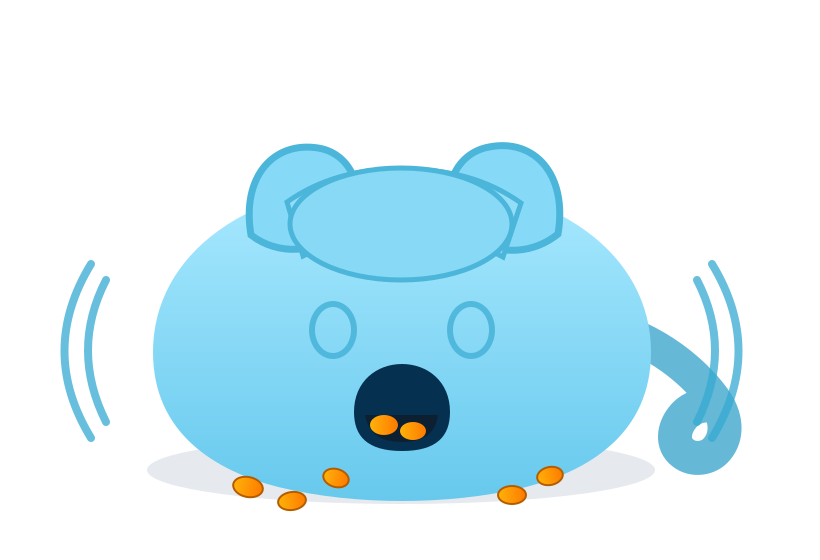
The maze controls how often food appears.
The cat does not “solve” the maze visually. The maze simply changes how food behaves inside the moving body.
Short path
Minimal obstruction. Good for teaching the basic interaction loop.
Interrupted path
Radial baffles break up direct movement toward the outlet.
Offset path
Nested rings and staggered openings make dispensing more dependent on orientation and motion.
Visual identity is also functional.
Ears = twist grips
The ears make the hatch easier to grasp while also making FoodFlip instantly read as a prey-like cat toy.
Tail = paw lever
A force applied farther from the center produces more rotational torque. The tail turns decoration into an interaction target.
Outlet = mouth cue
The front opening visually anchors the face while remaining the actual path that dispenses treats.